Getting there, dress, length and etiquette
Vienna Concert Evening: What to Know
How long the Mozart concert runs, how to reach the Musikverein by U-Bahn, what to wear, phone and photo rules, and access for wheelchairs and children.
See Vienna Mozart concerts on GetYourGuide ↗Quick answer
Allow under two hours for the music, with an interval of about 15 minutes. With dinner, the booking page lists about three hours in all. The Musikverein is beside Karlsplatz, reached by the U1, U2 or U4. Wear smart clothes, not sportswear. Phones stay off, photography is not permitted during the performance, and applause waits until a piece ends. Concerts run several evenings a week, not every night, so check the calendar for your date.
How the evening runs
The organiser's concert has an interval of about 15 minutes, so allow under two hours for the music. The package on this site adds dinner first, and the booking page lists three hours in all. Buffets open in the concert halls before the concert and during the interval, but beverages are not included in the ticket price. Concerts run several evenings a week, not every night. For a same-day plan, open the booking calendar to see which dates have seats, and use your confirmation for the times, because they can differ between dates and halls.
Getting to the Musikverein
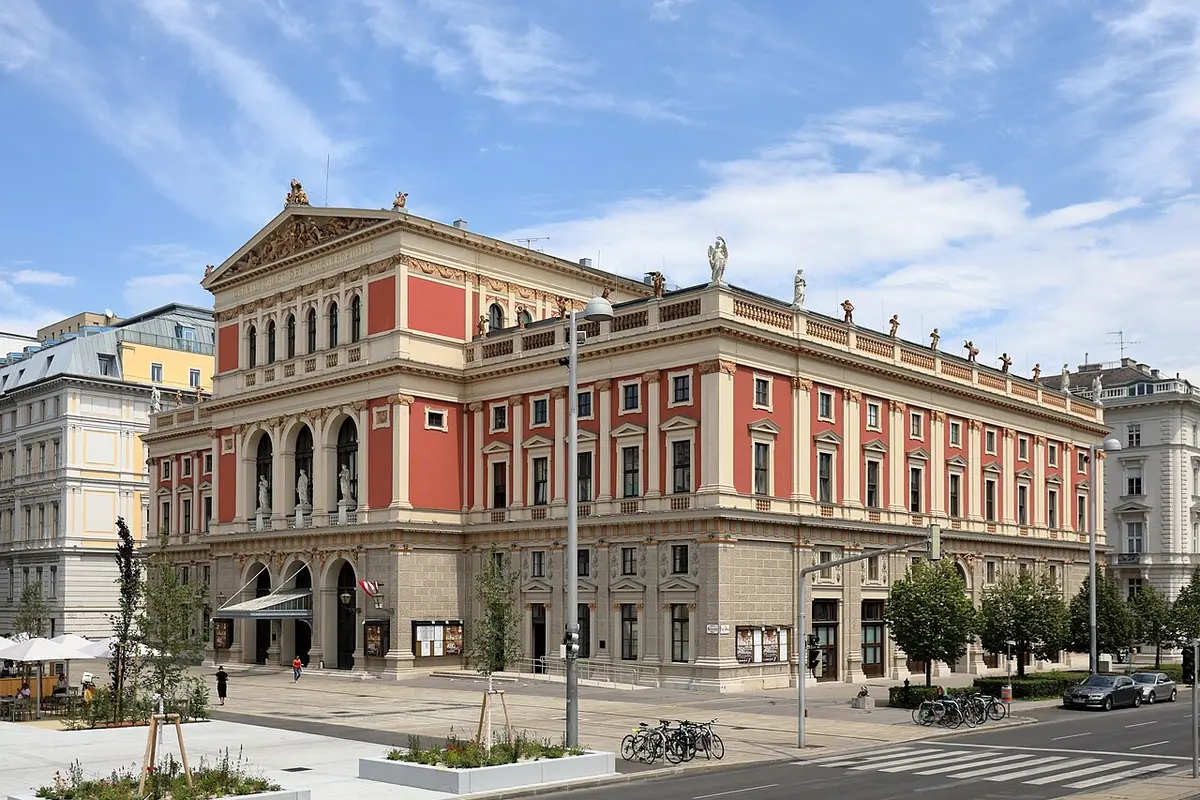
The Musikverein stands at Musikvereinsplatz 1, in the Innere Stadt just behind the Ringstrasse. Its main entrance is on Musikvereinsplatz, between Karlsplatz and Bösendorferstraße. The organiser's directions say to take the U1, U2 or U4 to Karlsplatz and use the exit marked Musikverein. The hall itself recommends public transport over a car for a relaxed evening. Tickets for public transport are bought separately, from the ticket machines or counters of Wiener Linien, the city's transport operator.
If your hall is the State Opera
The organiser also plays the Vienna State Opera, which it calls the First House on the Ring. For the Opera, its directions say to take the U1, U2 or U4 to Karlsplatz or Oper. The step-free way in is the side entrance on Herbert-von-Karajan-Platz, where wheelchair spaces are in the stalls and on the balcony. Two other venues belong to separate formats: Palais Auersperg, for the Imperial Gala Concert, is by Volkstheater station on the U2 and U3, and the Hofburg hall is by Herrengasse on the U3. Check which one your confirmation names.
From the dinner hotel to the hall
This package starts at a hotel restaurant, not at the concert hall. The booking page gives the hotel as the meeting point, and the dinner comes before the concert. Do not assume a transfer is included: check your confirmation for what the package covers and how to reach the hall. The U-Bahn, a taxi or a walk through the centre are the usual choices in Vienna, and the Musikverein lists taxi ranks on Canovagasse and on Kärntner Ring. Leave a margin, because the dinner and the walk both come before the concert.
Getting home
Look up your return trip on the Wiener Linien planner before you leave your hotel, not on the platform afterwards. From the Musikverein, the same Karlsplatz U-Bahn stations that brought you are the obvious route back, and taxi ranks stand on Canovagasse and on Kärntner Ring. If you are driving, the Musikverein advises that central Vienna is a paid short-stay parking zone with a two-hour limit on weekdays. Its own page recommends leaving the car at home, and that is the simpler advice for a concert with dinner.
What to wear
The organiser recommends elegant attire appropriate to the occasion, and the booking page recommends smart clothing. The Musikverein asks guests to dress festively and to avoid sportswear or training gear. None of these sources asks for black tie, so a jacket or smart separates is a safe middle. At the Musikverein, coats, bags, rucksacks and umbrellas may not be taken into the hall. The hall may charge for the cloakroom, and suitcases and large bags cannot be stored, so travel light on the day. Voluminous headgear is discouraged out of consideration for people behind you.
Phones, photos and applause
The organiser does not permit photography or filming during the performance. At the Musikverein, house rules go further: no video or audio recording before, during or after without permission, and phones switched off or on flight mode. In Vienna it is customary to applaud when a piece ends, not between movements. Food and drink may not be taken into the hall, so use the buffet in the interval. Once the doors close, latecomers are seated only during applause breaks or after the first half, so arrive early enough to find your seat.
What you hear and see
Mozart moved to Vienna in 1781 and stayed for the rest of his life, and the organiser builds its programme around his work, with the Strauss family as the complement. The booking page lists opera singers, soloists and historical costumes and wigs, and names the Blue Danube and the Radetzky March. The waltz dates from 1866 and was first heard in 1867 in a choral version. The march was written in 1848 by Johann Strauss I. If the conductor invites it, the audience may clap along, quietly on the first theme and loudly on the repeat. Programmes rotate, so none of this is promised.
Read next: The Music Behind a Vienna Mozart & Strauss Concert
Collecting your tickets
Booked through GetYourGuide, follow the instructions in your confirmation for how to get in. If you book direct from the organiser instead, e-tickets should be printed and shown at the entrance check. Tickets can also be collected at the organiser's office on Kärntner Straße, from one month before the concert, with your booking confirmation on paper or on a screen. Lost tickets can be reissued there on proof of purchase. Whichever route you use, keep the confirmation where you can open it quickly, including when your phone signal is weak.
Children, access and language
Children under 5 are not admitted. Every venue has wheelchair spaces, which must be announced to the organiser in advance. The Musikverein's step-free entrance is at the main entrance, on the right, with lifts and accessible toilets. Only certified assistance dogs are allowed, and the Musikverein asks owners to register in advance. The music needs no translation, and the organiser's booking site is offered in English, German, Italian, French, Spanish, Portuguese, Russian, Turkish, Chinese, Japanese and Korean, so you can read the terms in your own language before you pay.
Who this isn't for
This is not for anyone who wants a loose, late night: the dinner and the concert follow a set order, and the booking page lists three hours in all. It is not for children under 5, or for guests who need a wheelchair space and have not told the organiser in advance. It is also not for anyone who plans to photograph the performance or to keep a phone on. If you want to choose between packages first, our booking guide compares them.
Read next: Mozart Concert Vienna: Which to Book
Frequently asked questions
How long is the Vienna Mozart concert?
Allow under two hours for the music, including an interval of about 15 minutes. With dinner, the booking page lists about three hours in all. Your confirmation shows the exact times for your date.
Is there a dress code at the Musikverein?
There is no strict code, but the organiser recommends elegant attire and the Musikverein asks guests to avoid sportswear and training gear. Smart clothes are the safe choice. Coats and bags cannot be taken into the hall.
Can I take photos at the concert?
Not during the performance: the organiser does not permit photography or filming. The Musikverein also bars video and audio recording before and after without permission. Keep your phone off or on flight mode.
How do I get to the Musikverein?
Take the U1, U2 or U4 to Karlsplatz and follow the exit marked Musikverein. The main entrance is on Musikvereinsplatz. The hall recommends public transport over driving.
Are children allowed at the concert?
Children under 5 are not admitted. Ages 5 to 18 can buy discounted tickets with valid photo ID. Check the options on your date for what applies to the dinner package.
Is there a concert every night?
No. The organiser describes several concerts per week, not nightly performances, so check the booking calendar for your date. Your confirmation shows the hall and the times.
Sources
- How to book, rebook and visit: FAQ (Wiener Mozart Konzert)
- Location and directions (Wiener Mozart Konzert)
- The concert halls (Wiener Mozart Konzert)
- Concert visit: tickets, dress code, arrival, behaviour (Musikverein)
- Musikverein (Wikipedia)
- Wolfgang Amadeus Mozart (Wikipedia)
- The Blue Danube (Wikipedia)
- Radetzky March (Wikipedia)