Dinner package, concert only or VIP
Mozart Concert Vienna: Which to Book
Dinner package or concert only, which hall, how to book direct or through GetYourGuide, and who these evenings are not for. Checked against the organiser.
See Vienna Mozart concerts on GetYourGuide ↗Quick answer
If you want one planned evening, book the Vienna Mozart Orchestra concert with the three-course dinner. It includes the concert ticket, dinner at a hotel restaurant and a CD. If you would rather choose where to eat, take a concert-only ticket. The booking page puts the concert at the Musikverein, but the organiser also plays other halls, so check your confirmation for yours. Booked through GetYourGuide, this package cancels free up to three days ahead.
Three ways to book a Wiener Mozart Konzert evening
| Dinner package | Concert only | VIP, direct | |
|---|---|---|---|
| Includes | Concert, dinner, CD | Concert ticket only | Premium seat, dinner, extras |
| Dinner | Three courses, hotel | None | Four courses, 5-star hotel |
| Cancelling | Free to 3 days, via GetYourGuide | Depends where booked | Free rebooking, no refund |
| Best for | One planned evening | Eating elsewhere | A splurge evening |
What the dinner package is
This is the Vienna Mozart Orchestra's concert sold together with dinner. The package includes a three-course meal in a hotel restaurant, the concert ticket and a CD by the orchestra. The booking page lists the whole evening as about three hours, with dinner first and the concert afterwards. Drinks are extra: the organiser, Wiener Mozart Konzert, says beverages are not included in the ticket price. The hotel is also the meeting point, so you start the evening there, not at the concert hall. Check your confirmation for the hotel details and the start times, and rely on that rather than on any times you read elsewhere.
Which hall you will be in
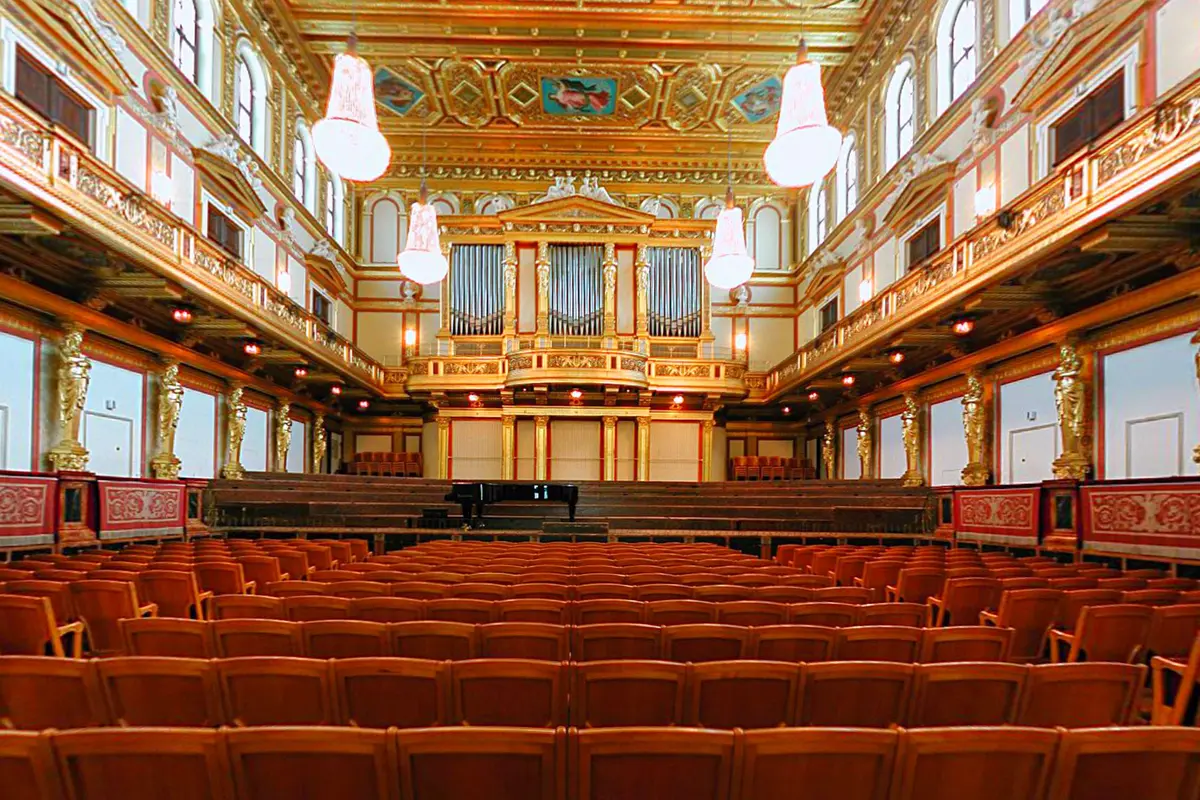
The booking page places the concert at the Musikverein. The organiser stages its Mozart concerts in the Musikverein's Golden Hall and Brahms Hall and at the Vienna State Opera, so the hall depends on the date. Check your confirmation for yours. The Golden Hall opened in 1870 and is where the Vienna Philharmonic plays its New Year's Concert, broadcast internationally. The organiser credits its sound to its proportions and to balconies, sculptures and galleries that scatter sound. The Brahms Hall is smaller, and the organiser describes it as suited to chamber music and to closeness between audience and musicians.
Dinner package or concert only?
Choose the package if you want dinner and concert tied together in one booking. The dinner comes first, in a hotel restaurant, so the evening has a fixed shape and one place to be. Choose concert only if you already have a restaurant in mind, want a lighter evening, or are travelling with someone who would rather not sit through three courses. The organiser sells a concert-only ticket on its own site. The orchestra is the same either way, so you are choosing how much of the evening to plan, not a different group of musicians.
Booking through GetYourGuide or direct
Both routes are legitimate, so it comes down to terms. Booked through GetYourGuide, this package can be cancelled free up to three days before for a full refund. Booked direct from the organiser, e-tickets cannot be cancelled or refunded, but you can rebook to another date free of charge, subject to availability: up to 72 hours before for dinner and concert packages and up to 24 hours before for concert-only tickets. Direct bookings can also be collected and paid for, by cash or card, at the organiser's office on Kärntner Straße. If a refund option matters to you, the GetYourGuide terms are the more flexible of the two.
Seat categories and where you sit
The organiser's own site sells its dinner packages in four seat categories, called Superior, A, B and C, plus a VIP package with a premium seat. The booking calendar for this package shows what is offered on your date, so choose the date first and the seat second. The hall's sound is credited to its shape and surfaces, not to one spot, which suggests the category mostly decides how close and how high you sit. That is an inference, so check the organiser's seating plan for your hall. Wheelchair spaces exist in every venue but must be announced in advance.
Who plays and what you see
The organiser says the Wiener Mozart Konzert was founded in 1986 by musicians from Vienna's leading orchestras, and it performs in historical costumes and wigs. The booking page names opera singers and soloists, overtures, arias and duets from Mozart's best-known operas, and two Strauss favourites, the Blue Danube and the Radetzky March. Programmes change, so read that as the usual shape of the evening, not a fixed list. For what each piece is and why it is there, see our guide to the music.
Read next: The Music Behind a Vienna Mozart & Strauss Concert
Kursalon, Musikverein or State Opera?
Many people searching for the Kursalon want waltz concerts in the Stadtpark, which are a different product from this one. The Kursalon was built between 1865 and 1867 in an Italian Renaissance style, and Johann Strauss II gave his first concert there in 1868. It is still used for concerts, and the park's gilded Strauss monument is one of Vienna's most photographed. This package is the Vienna Mozart Orchestra at the Musikverein, a hall that opened in 1870 and houses the Vienna Philharmonic. Pick the Kursalon if the waltz is the point of your evening, and the Musikverein if the hall and the Mozart programme are.
Other ways to hear Mozart in Vienna
The Musikverein runs its own concert season, sold by the hall itself. Its general advance sale starts one week after members' sales, which open two months ahead, and the hall says booked tickets cannot be cancelled. The organiser of this concert also plays the Vienna State Opera, and its Imperial Gala Concert is a separate best-of programme for the orchestra's soloists at Palais Auersperg, which is not wheelchair accessible. If you only want to hear this orchestra and have no use for dinner, a concert-only ticket is the simplest of these. Read any other listing's own terms before you book.
Children, students and discounts
Children under 5 are not admitted to the organiser's concerts. Young people aged 5 to 18 can buy discounted tickets with valid photo ID, and so can ISIC cardholders up to 27. The booking page adds that no other student card is accepted. These are organiser rules, so check the options on your date for what applies to the dinner package, and carry the ID with you. Group bookings of 20 or more tickets are handled individually by the organiser, not through the calendar, so contact its team before you book for a larger party.
Who this isn't for
Skip the dinner package if you want a full symphonic programme from the Vienna Philharmonic or another resident orchestra. This is a costumed Mozart and Strauss concert, and those orchestras sell their own seasons. It is also not for travellers who need free cancellation closer than three days, who are bringing a child under 5, or who want a loose evening with no fixed dinner slot. And if the Kursalon's waltz setting is what you are after, look at the Kursalon's own programme instead.
Frequently asked questions
Is dinner included in the ticket?
Yes. This package includes a three-course dinner at a hotel restaurant before the concert, plus the concert ticket and a CD. Drinks are not part of the ticket price, so plan to pay for them separately.
Can I cancel a Vienna Mozart concert booking?
Booked through GetYourGuide, this package can be cancelled free up to three days before for a full refund. Booked direct from the organiser, e-tickets cannot be cancelled or refunded, but free rebooking is possible, subject to availability, up to 72 hours before for dinner packages.
Is this the Vienna Philharmonic?
No. The Vienna Philharmonic is based at the Musikverein, but this concert is by the Vienna Mozart Orchestra, which the organiser says was founded in 1986 by musicians from Vienna's leading orchestras. It performs in historical costumes and wigs.
Which hall is the concert in?
The booking page names the Musikverein. The organiser also uses the Golden Hall, the Brahms Hall and the Vienna State Opera for its concerts, so check the hall in your confirmation before you travel.
Are there discounts for children or students?
Children under 5 are not admitted. Ages 5 to 18 and ISIC holders up to 27 can buy discounted tickets with photo ID or an ISIC card. The booking page says no other student card is accepted.
Do I need to book ahead?
Seats are sold by date, and the booking page marks this concert as likely to sell out. Choose your date in the booking calendar first, then compare the options it offers for that evening.
Sources
- How to book, rebook and visit: FAQ (Wiener Mozart Konzert)
- Dinner and VIP packages (Wiener Mozart Konzert)
- The concert, orchestra and programme (Wiener Mozart Konzert)
- The concert halls (Wiener Mozart Konzert)
- Concert visit: tickets, dress code, arrival, behaviour (Musikverein)
- Musikverein (Wikipedia)
- Stadtpark, Vienna (Wikipedia)